Blogs
Signs of a Healthy Bird: What to Look For Before Buying
Jun
Signs of a Healthy Bird: What to Look For Before Buying
When expanding your farm infrastructure, purchasing new genetic bloodlines is the quickest way to upgrade your breeding project. However, entering a seller’s yard without a systematic screening plan is one of the biggest risks you can take. Knowing the definitive signs of a healthy bird is your absolute best defense against importing chronic diseases, poor skeletal structures, or internal parasites into your clean facility.
Far too often, buyers fall in love with a bird’s coloration or pedigree paper trail while completely overlooking subtle indicators of systemic failure. A bird that looks slightly quiet or shows a tiny hint of moisture around its nostrils can easily be a carrier for highly contagious bacterial pathogens that can devastate your existing flock within a single week. To protect your investment, you must learn to execute an unyielding, hands-on physical exam before exchanging any money.
The Financial Stakes of Selection -Signs of a Healthy Bird
When you pay a premium price for poultry, you are buying their future performance and genetic longevity. Investing in poor-quality stock means wasting months of feed, incubation space, and labor on birds that may never produce healthy chicks.
By mastering the art of selecting healthy breeding stock, you establish a high barrier of entry at your farm gate, keeping out subpar bloodlines and securing a foundation for elite flock performance.
The 60-Second Physical Inspection Protocol – Signs of a Healthy Bird
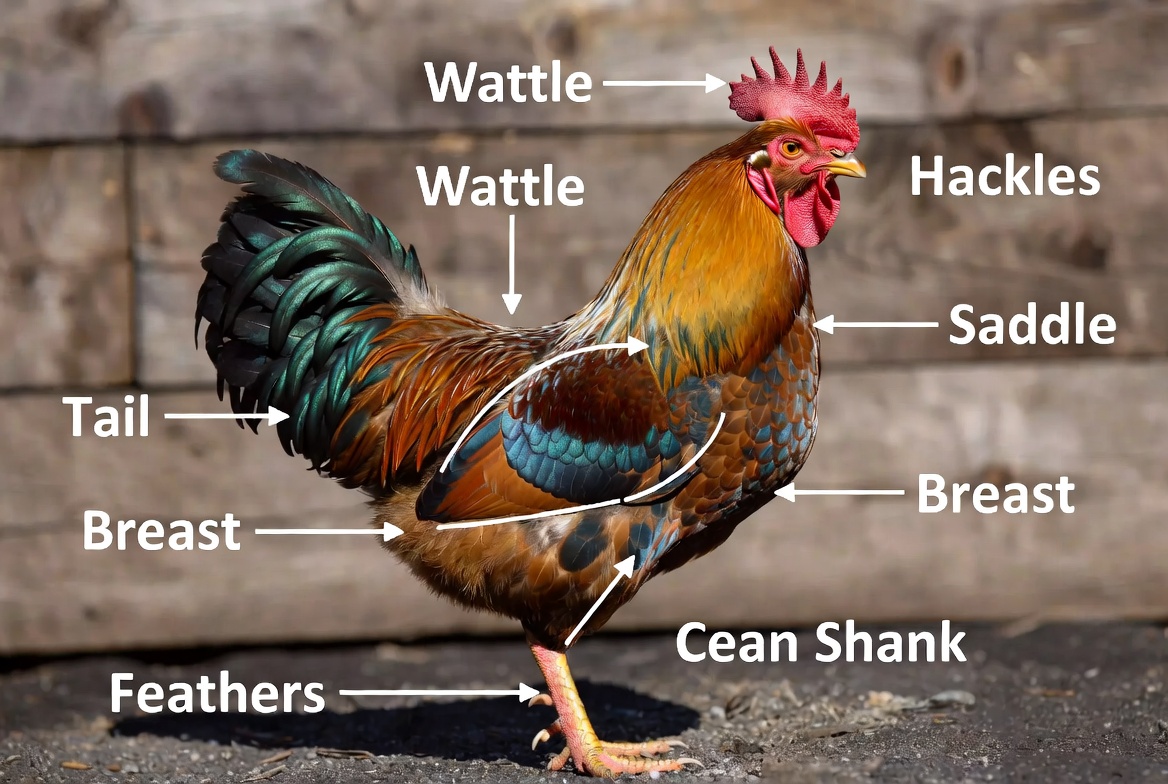
Do not just watch a bird walk around a pen from afar. Catch the specimen, hold it securely against your body, and systematically examine it from head to toe using this professional poultry physical examination routine.
1. Head, Face, and Respiratory Elements (Signs of a Healthy Bird)
- The Eyes: Look for wide, bright, perfectly round pupils. Reject any bird with oval or pinpoint pupils (a common sign of Marek’s disease), or any sign of foaming, watery fluid, or cloudiness in the eye tissue.
- The Comb & Wattles: These tissues should be bright red, plump, and warm to the touch. A pale, shrunken comb indicates anemia, internal worm infestations, or systemic organ failure. Black spots on the edges point to past or present Fowl Pox scabs.
- Nostrils & Breathing: Look closely at the beak line. The nostrils must be completely dry and clear. Press gently on the nasal bridge; if any clear or foul-smelling mucus bubbles out, hand the bird back to the seller immediately. Listen closely to the chest area—there should be no clicking, wheezing, or wet gurgling sounds.
2. Body Structure and Muscle Mass (Signs of a Healthy Bird)
- The Keel Bone Check: Run your hand firmly along the center of the bird’s breast. The straight breastbone (keel) should be well-covered with firm, plump muscle tissue. If the bone feels sharp like a knife edge with recessed muscle tissue on either side, the bird is in a state of chronic wasting or severe malnutrition.
- The Vent Area: Flip the bird over to inspect the vent (the rear opening where droppings exit). The feathers around this zone must be completely clean and dry. Yellow crusting, pasted droppings, or raw skin indicate chronic diarrhea, intestinal parasites, or internal infections.
3. Feathers and External Leg Infrastructure (Signs of a Healthy Bird)
[Inspect Base of Feather Shafts for Mite Clusters] ──> [Run Hand Down Keel Bone for Muscle Mass] ──> [Check Leg Scales for Smooth Alignment]
- Feather Integrity: Part the plumage around the vent and under the wings. Inspect the very base of the feather shafts. If you see tiny crawling insects or clusters of concrete-like gray debris, the bird is suffering from an active mite or lice infestation.
- Leg Quality & Scales: Examine the shanks and toes. The protective scales should lie flat, smooth, and uniform. Raised, crusty, or bleeding leg scales indicate a severe infestation of burrowing scaly leg mites. All toes must be completely straight and point in the correct directions, showing no missing claws or swollen, warm pads on the bottom of the foot (bumblefoot).
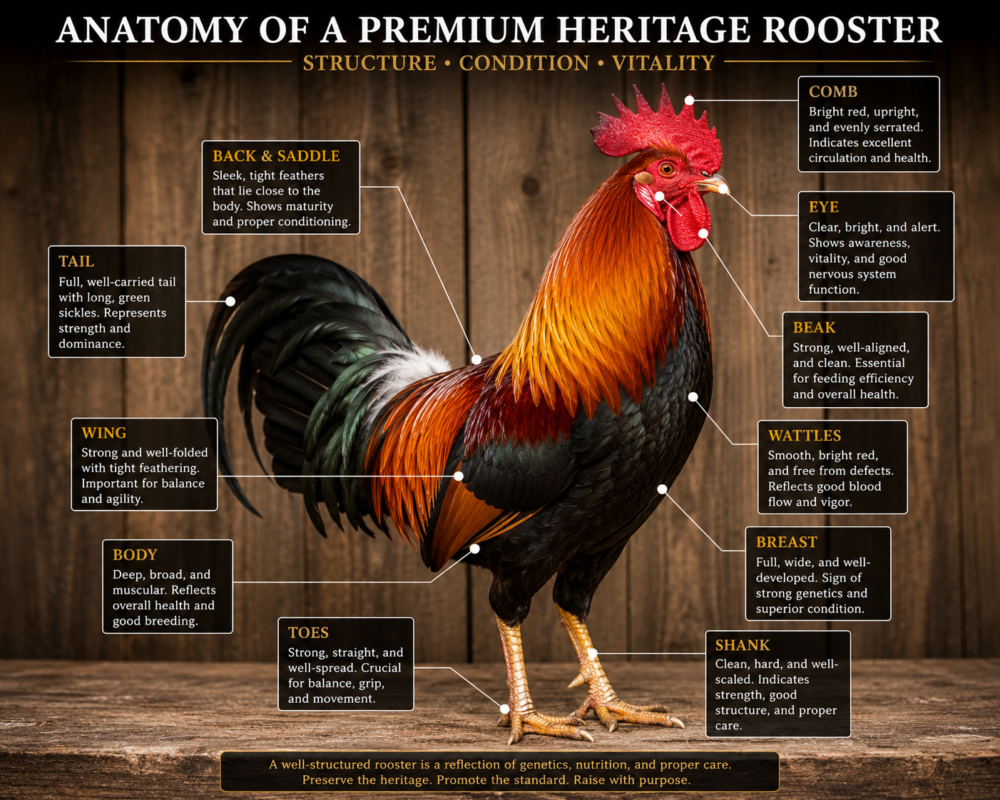
On-Site Poultry Evaluation Matrix – Signs of a Healthy Bird
Keep this clear structural scorecard in mind whenever you are evaluating new birds at an auction or private farm site:
| Anatomical Zone | The Premium Target (Buy) | The Critical Warning Signs (Reject) | Underlying Risk Factor |
| Eyes & Pupils | Perfectly round, deep color, alert, completely clear. | Oval or asymmetric shapes, cloudiness, wet foam. | Marek’s Disease or Coryza infection. |
| Keel & Breast | Plump, thick muscle covering, straight bone alignment. | Sharp knife-edge feel, severe muscle shrinkage. | Chronic internal parasite loading or wasting disease. |
| Leg Shanks | Smooth, flat scales, clean skin coloring, cool joints. | Raised, chalky white crusts, hot or swollen foot pads. | Scaly leg mites or systemic Bumblefoot infections. |
| Vent & Rear | Fluffy, dry feathers, clean pink skin tissue. | Matted wet droppings, foul odor, bare broken skin. | Intestinal Coccidiosis or bacterial enteritis. |
Frequently Asked Questions on Signs of a Healthy Bird
Why is a bird’s alertness the most telling sign of health?
Healthy poultry are naturally curious, highly reactive animals that are constantly scanning their surroundings. A bird that stands hunched in a corner with its head pulled into its shoulders, its eyes closed, or its wings drooping is in a state of high physical distress. This listless posture is a universal indicator that the bird’s immune system is losing its battle with an underlying pathogen.
Should I buy a bird that is currently in a heavy molt?
Purchasing a bird during a heavy molt is acceptable if you are certain the feather loss is purely seasonal and not caused by stress or disease. However, keep in mind that a molting bird’s immune system is temporarily running at half-capacity, making them much more vulnerable to transport stress and tracking pathogens during the journey to your farm.
What should I ask the seller before taking the bird home?
Always ask three direct operational questions:
- What specific vaccination timeline did this bird receive as a chick?
- What exact feeding routine is this bird currently eating? (Sudden feed transitions can trigger fatal digestive stress).
- When was the last time this specific yard ran an internal deworming or parasite treatment?
Secure Your Facility with Elite Selection Choices – Signs of a Healthy Bird
Developing a sharp eye for the physical signs of a healthy bird elevates you from an average hobbyist into a highly competent, professional manager. By applying a systematic head-to-toe physical inspection, verifying muscle mass, and hunting for hidden external pests, you shield your home flock from outside contamination. This discipline ensures every dollar you spend on new breeding stock actively pushes your lines toward premium health, structural excellence, and generational longevity.
Products by Category
-

Fairchild Grey Gamefowl for Sale – Premium Grey Birds
Price range: $150.00 through $435.00 -
Frost Grey Gamefowl for Sale – Premium Grey Birds
Price range: $120.00 through $350.00 -
Gerrard Hatch Gamefowl for Sale – Premium Bloodline Birds
Price range: $110.00 through $315.00 -
Gilmore Hatch Gamefowl for Sale – Premium Hatch Bloodline Birds
Price range: $180.00 through $525.00 -
Golden Monkey Sweater Gamefowl for Sale – Premium Bloodline Birds
Price range: $150.00 through $430.00 -
Hennie Gamefowl for Sale – Premium Heritage Birds
Price range: $150.00 through $430.00 -
Kelso Game Hens for Sale – Premium Purebred Gamefowl Hens
Price range: $150.00 through $430.00 -
Kelso Gamefowl for Sale – Premium Strategic Bloodline Birds
Price range: $150.00 through $430.00 -
Premium American Gamefowl Online – Buy Top Line Birds Online
Price range: $100.00 through $270.00