Blogs
Molting Season: What to Expect and How to Support Your Birds
Jun
Molting Season: What to Expect and How to Support Your Birds
Once a year, usually as the long days of summer begin to wane, every poultry yard undergoes a massive physical transformation. The arrival of the annual molting season can be an incredibly alarming sight for beginners and experienced homesteaders alike.
Seemingly overnight, your pristine, vibrant birds begin dropping their feathers, looking tattered, losing weight, and halting egg production completely. Many independent producers misdiagnose this natural phase, treating it as an illness or wasting capital on generic medications. In reality, the molt is a demanding biological marathon. To ensure long-term heritage bird health, you must understand exactly how to adjust your daily nutrition and environment to rebuild your flock’s armor.
The Biological Reality of the Shed (Molting Season)
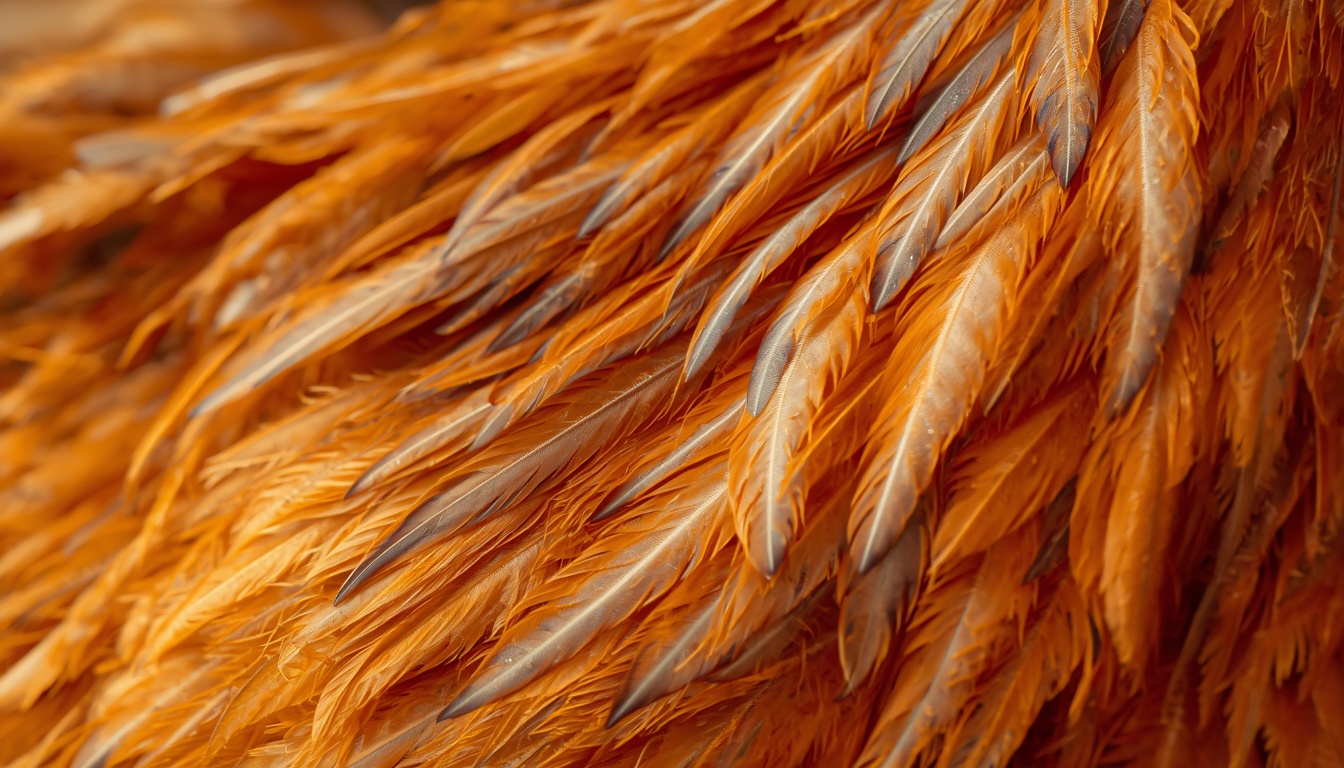
Molting is the natural, hormonal process where a bird completely sheds its old, damaged feathers and replaces them with a fresh coat of pristine plumage. This cycle is typically triggered by dropping sunlight levels, indicating that winter is approaching and a dense, well-insulated feather coat is required for survival.
Hormonal Trigger (Less Sunlight) ──> Old Feather Drops ──> Vascular "Blood Feather" Appears ──> Sheath Dries & Flakes ──> Mature Keratin Feather Locked
Feathers are not just decorative; they make up roughly 4% to 7% of a rooster’s total body weight. More importantly, feathers are made almost entirely of keratin, a tough, structural protein. Rebuilding thousands of individual feathers simultaneously places a massive metabolic strain on your birds’ organs, temporarily draining their immune systems and redirecting all their physical energy away from performance or reproduction.
Feather Regrowth Nutrition: Flipping the Macro Switch (Molting Season)
When your birds enter the molt, your standard maintenance feeding program must be discarded immediately. To support this massive physical reconstruction, your flock’s dietary requirements shift away from carbohydrates and heavily toward specific building blocks. Meeting these elevated gamefowl protein requirements prevents stags from stunting and hens from experiencing chronic nutrient depletion.
1. The 20% Protein Mandate (Molting Season)
Standard poultry scratch or low-protein mixes will prolong the molt for months, leaving your birds exposed to the elements. Transition your flock to a specialized pre-conditioning crumble or pellet that delivers a minimum of 20% to 22% crude protein.
2. The Power of Sulfur Amino Acids (Molting Season)
Raw protein mass is useless if it lacks the correct chemical profile. Keratin production relies entirely on sulfur-rich amino acids.
- Methionine & Lysine: Look for a feed or water-soluble supplement enriched with these two critical components. They act as the direct biological bricks that knit new feather strands together.
- Black Oil Sunflower Seeds (BOSS): Introduce a handful of BOSS to your daily feed cups. They are packed with healthy fats and linoleic acids that coat the emerging feathers, giving the fresh plumage a beautiful, brilliant gloss.
Handling and Housing During the Soft Phase (Molting Season)
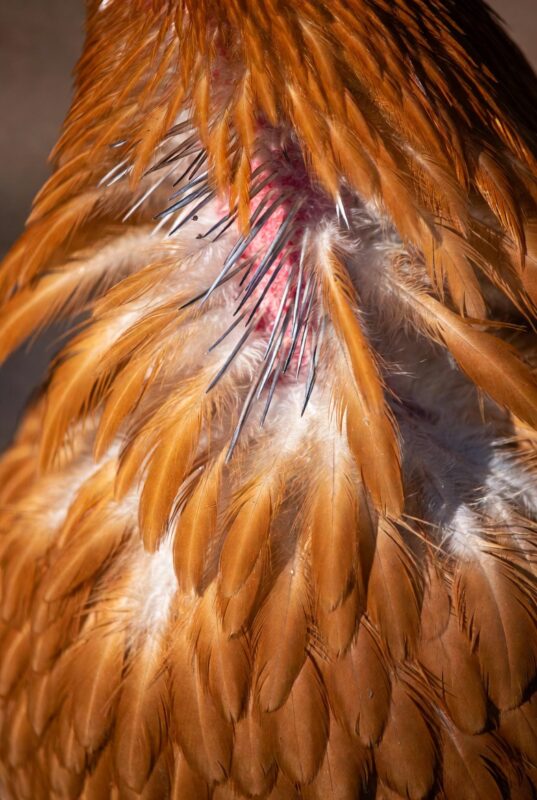
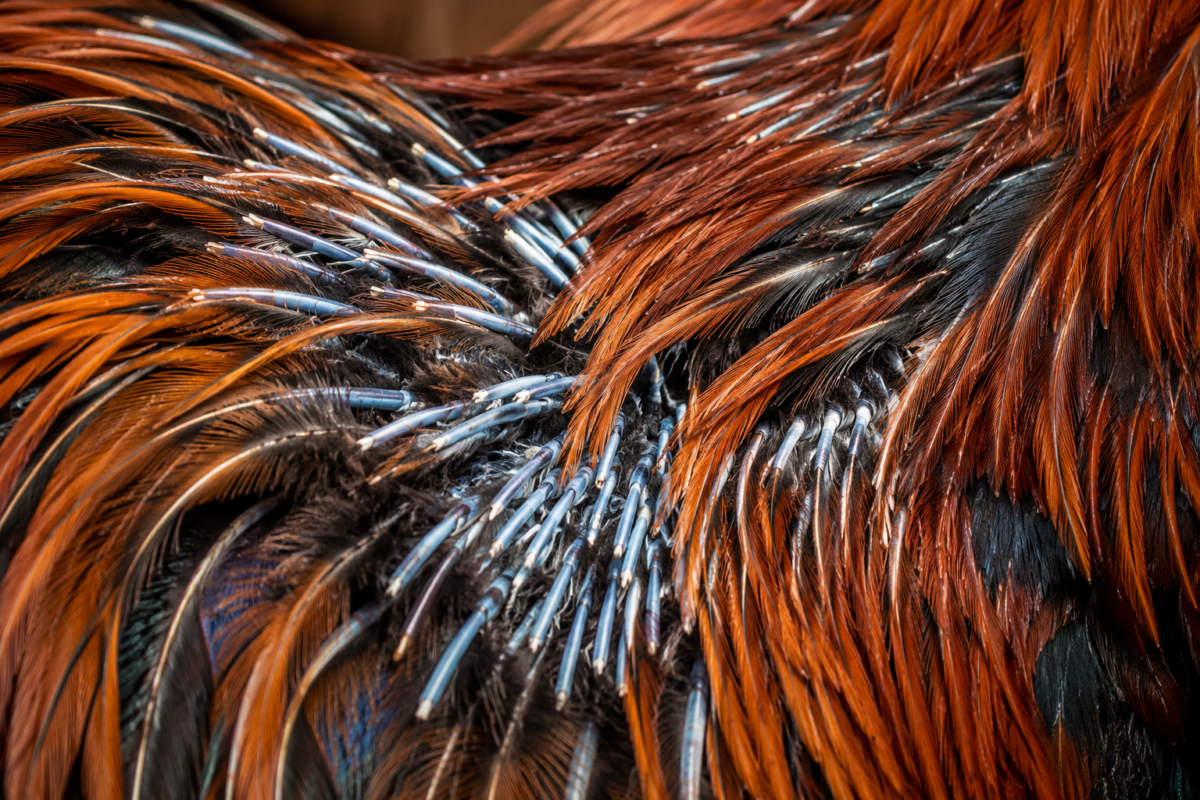
An emerging feather is known as a “blood feather.” Because the shaft is actively growing, it contains a major, live blood vessel running right through the center.
During this phase, the bird’s skin is incredibly sensitive, tender, and prone to bruising. A single rough handling session can easily rupture these vascular shafts, causing intense pain and substantial bleeding.
- Implement a Zero-Handling Rule: Avoid carrying or holding your roosters unless it is absolutely necessary for health checks. When you must pick them up, do so with extreme gentleness, ensuring you do not compress their wings or sides roughly.
- Soften the Environment: Inspect your individual fly pens and coops. Remove any rough, jagged tree branches or sharp metal edges. Line the nesting boxes and roosting areas with a thick, forgiving layer of clean pine shavings or soft straw to prevent the birds from scraping their bare skin.
Molting Season Management Chart
Track your flock’s transition smoothly using this clear operational guide:
| Phase of Molt | Visible Signs | Nutritional Target | Primary Care Action |
| Phase 1: The Drop | Massive feather loss around neck and back; pale combs. | 20% Protein; introduced slowly over 7 days. | Clean the yard daily to remove dropped feathers; check for skin mites. |
| Phase 2: The Pin | Sharp, waxy spikes (blood feathers) break through the skin. | Maximize Methionine and add Vitamin B-Complex. | Stop all non-essential handling; add deep bedding to pens. |
| Phase 3: The Sheath Shed | Birds preen and flake away white waxy casings; color returns. | 18% Protein mixed with black oil sunflower seeds. | Provide clean dust-bathing sand to assist with natural casing removal. |
Frequently Asked Questions On Molting Season
How long does a normal poultry molt last?
A standard, healthy molt typically takes between 8 to 12 weeks. However, a bird backed by poor genetics or subpar nutrition can enter a “stuck molt,” lingering in a semi-feathered, fragile state for up to 6 months.
Why are my molting roosters acting so unsocial and quiet?
This behavior is completely normal. Because their skin is physically sore and their metabolic energy is entirely depleted by feather production, roosters will naturally isolate themselves, crow less frequently, and rest more than usual.
Should I continue feeding calcium supplements during the molt?
Since brood hens completely stop laying eggs during their annual feather drop, their demand for calcium drops significantly. Maintain a standard baseline, but shift your financial focus away from calcium and entirely toward high-quality protein and amino acid supplements until their plumage is fully restored.
Rebuild a Stronger, Brighter Flock
Navigating the annual molting season requires patience, observant husbandry, and a precise shift in your feed room macros. By protecting your birds from physical stress, upgrading your infrastructure safety, and fueling their bodies with premium sulfur amino acids, you protect your agricultural capital and ensure your valuable bloodlines emerge from the shed stronger, healthier, and completely prepared for the seasons ahead.
Products by Category
-

Baby Chicks: Easter Egger Bantam for Sale – Colorful Egg Layers
$14.00 -
Barnevelder Day Old Chicks for Sale – Heritage Egg Layers
$14.00 -
Barred Plymouth Rock Day Old Chicks for Sale – Dual-Purpose Heritage Poultry
$12.00 -
Black Australorp Hybrid Day Old Chicks for Sale – High Egg-Production Poultry
$13.00 -
Buff Orpington Day Old Chicks for Sale – Friendly Dual-Purpose Poultry
$12.00 -
Light Brahma Chicks for Sale – Gentle Heritage Poultry Chicks
$14.00 -
Red Laced Gold Wyandotte Day Old Chicks for Sale – Ornamental Dual-Purpose Poultry
$11.00 -
Rhode Island Red Day Old Chicks for Sale – Classic Dual-Purpose Poultry
$11.00 -
Silver Laced Polish Day Old Chicks for Sale – Ornamental Heritage Poultry
$13.00