Blogs
Vaccination Schedules and Deworming for Poultry: Master Plan
Jun
Vaccination Schedules and Deworming for Poultry
When managing high-value heritage poultry lines or an elite backyard flock, waiting for your birds to get sick before taking action is a losing strategy. Implementing a rigorous, proactive program for vaccination schedules and deworming for poultry is the absolute foundation of professional animal husbandry.
Viruses like Marek’s Disease or Fowl Pox cannot be cured once they take hold; they can only be prevented. Similarly, heavy internal parasite loads quietly drain a bird’s metabolic energy, stunting bone density development and rendering your carefully calculated feeding programs useless. By establishing a strict, calendar-driven preventative shield, you safeguard your agricultural capital and ensure your birds live up to their maximum genetic potential.
The Preventative Biological Shield – Vaccination Schedules and Deworming for Poultry
Think of vaccines as a controlled training camp for your flock’s immune system. Introducing a safe, altered version of a pathogen teaches the bird’s white blood cells to create specialized antibodies. If the wild virus ever breaches your farm’s perimeter, the bird’s body recognizes it instantly and neutralizes it before it can cause structural tissue damage.
To complement this internal defense, an exact flock health preventive care routine must manage the biological pressure exerted by internal parasites. Worms do not just steal nutrients—they physically scar the intestinal tract, leaving the bird highly vulnerable to secondary bacterial infections.
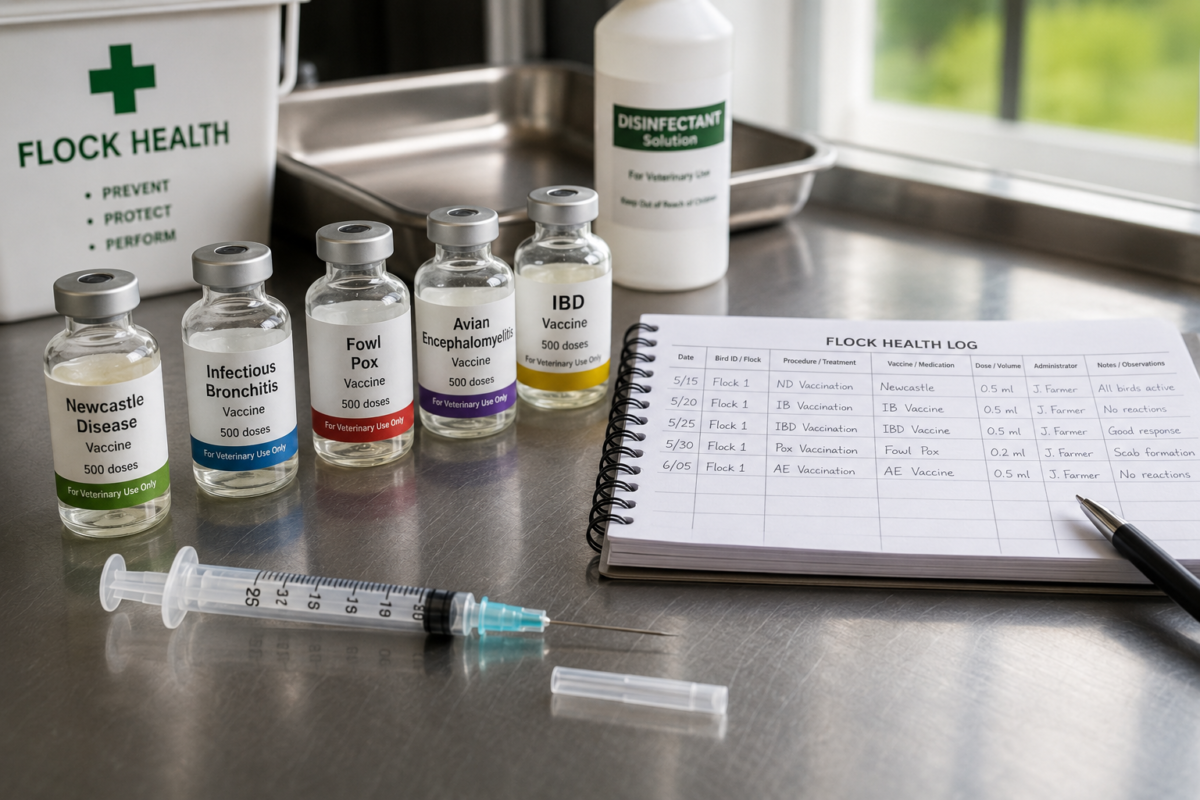
The Master Poultry Vaccination Schedule
For maximum efficacy, vaccines must be administered at precise milestones in a bird’s development. Deviating from a professional poultry immunization calendar can leave your birds completely unprotected during high-risk growth windows.
1. Day 1: The Marek’s Defense
- Target: Marek’s Disease (a highly contagious herpesvirus causing paralysis and tumors).
- Administration: Subcutaneous (under the skin) injection in the back of the neck at the hatchery. Maternal antibodies do not protect against Marek’s, making immediate day-one inoculation vital before chicks are exposed to natural dust or dander.
2. Weeks 2 to 3: Respiratory Shield
- Target: Newcastle Disease (ND) and Infectious Bronchitis (IB).
- Administration: Intranasal/intraocular (nose or eye drops) or dissolved in clean, cool, chlorine-free drinking water. This builds local mucosal immunity in the respiratory tract.
3. Weeks 8 to 10: The Wing-Web Protocol
- Target: Fowl Pox (a slow-spreading virus causing painful scabs on unfeathered skin).
- Administration: Wing-web puncture using a double-pronged needle dipped in the live vaccine. Avoid hitting blood vessels or muscles. Check the puncture site 7 days later for a small scab or “take,” which confirms a successful immune response.
Defining the Ultimate Gamefowl Deworming Protocol -Vaccination Schedules and Deworming for Poultry
Unlike commercial birds kept on concrete floors, heritage poultry raised in spacious outdoor fly pens are in constant contact with the soil. This exposes them to intermediate parasite hosts like earthworms, snails, and beetles.
Bird Ingests Infected Host/Egg ──> Larvae Hatch in Gut ──> Intestinal Wall Damage ──> Active Worms Shed Eggs in Droppings
To break this reproductive cycle, you must implement a strategic, rotating gamefowl deworming protocol.
1. The Bi-Annual Rotation Strategy (Vaccination Schedules and Deworming for Poultry)
Do not use the exact same dewormer repeatedly, or the parasites in your soil will quickly develop genetic resistance to the chemical compound. Rotate between different classes of broad-spectrum anthelmintics every 6 months (typically in early spring and late autumn).
- Benzimidazoles (Fenbendazole / Albendazole): Outstanding for eliminating gapeworms, roundworms, and cecal worms. It works by starving the parasites of glucose.
- Macrocyclic Lactones (Ivermectin / Moxidectin): Highly effective against both internal nematodes and blood-sucking external parasites like northern fowl mites.
2. The 10-to-14 Day Follow-Up Rule (Vaccination Schedules and Deworming for Poultry)
Most common poultry dewormers only kill adult worms living inside the bird’s body—they do not destroy unhatched eggs.
Critical Rule: Always administer a second follow-up dose exactly 10 to 14 days after the initial treatment. This secondary strike kills the newly hatched larvae before they can mature into egg-laying adults, successfully breaking the parasite’s life cycle in your facility.
Operational Health & Medication Reference – Vaccination Schedules and Deworming for Poultry
Streamline your farm’s health management workflow by utilizing this clean, structural operational reference chart:
| Application Timing | Medication / Vaccine Type | Method of Delivery | Critical Management Action |
| At Hatch (Day 1) | Marek’s Disease Vaccine | Subcutaneous Injection | Keep chicks warm and completely isolated from adult feather dander for 14 days. |
| Early Spring (Adults) | Fenbendazole (Broad-Spectrum) | Mixed into daily feed or water | Remove all treated eggs from human consumption for the specified withdrawal period. |
| Mid-Summer (Weeks 8-10) | Fowl Pox Live Vaccine | Wing-Web Puncture | Mix only enough vaccine for immediate use; discard any leftover open vials safely. |
| Late Autumn (Adults) | Ivermectin / Moxidectin | Topical drop or oral dose | Clean and remove all old coop bedding 48 hours after treatment to prevent reinfection. |
Frequently Asked Questions on Vaccination Schedules and Deworming for Poultry
Can I vaccinate a bird that is already showing symptoms of illness?
No. Never vaccinate a bird that is lethargic, thin, or suffering from an active respiratory infection. Vaccines require a completely healthy metabolism to build antibodies effectively. Vaccinating a compromised bird can overload its immune system, worsening its condition or causing death.
What does “egg withdrawal period” mean during deworming?
The egg withdrawal period is the specific number of days following medication administration during which chemical residues may be present inside the eggs. During this window, eggs collected from treated hens must be discarded and should not be consumed by humans or fed back to livestock. Always check the label of your specific anthelmintic for exact withdrawal durations.
Why do my birds look thin and pale even though I feed them premium grain?
If your poultry have pale combs and look emaciated despite a high-quality diet, they likely have a severe internal worm infestation, such as capillary worms or tapeworms. These parasites anchor into the mucosal lining of the intestines, intercepting and consuming vitamins, amino acids, and proteins before the bird’s body can absorb them.
Secure Your Flock’s Future and Vitality – Vaccination Schedules and Deworming for Poultry
Mastering a calendar-driven system for vaccination schedules and deworming for poultry is what elevates a backyard hobbyist into an elite preservationist. By administering vaccines at the correct biological milestones and systematically rotating your deworming compounds, you establish an invisible armor around your yard. This proactive care keeps your heritage lines running at peak performance, maximizing growth, fertility, and long-term vitality.